Free Delivery On All Orders Over $100
Silicone vs Vinyl Reborn Dolls

Silicone vs Vinyl Reborn Dolls: The Honest, Detailed Comparison Every Buyer Needs (2026)
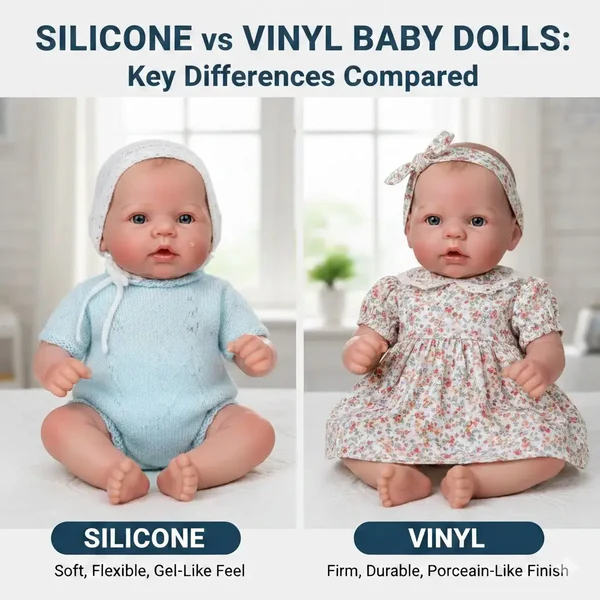
You’ve found your way to this page because you’re standing at a crossroads most new buyers don’t even know exists. You’re not just choosing a doll. You’re choosing a completely different tactile experience, a different maintenance routine, a different price point — and honestly, a different emotional relationship with the object you bring home.
I’ve watched this question come up again and again in collector communities across the USA, UK, Germany, Canada, France, and Australia. “Which is better — silicone or vinyl reborn dolls?” And the answer that gets thrown around most often is, frustratingly, “it depends.” That’s technically true. But it’s also a cop-out, and you deserve better than a shrug.
So let’s do this properly. In this guide, I’m going to walk you through every meaningful difference between silicone reborn dolls and vinyl reborn dolls — material by material, category by category. Touch. Weight. Realism. Durability. Maintenance. Price. Posing. Bathing. Long-term value. All of it. By the time you’re done here, you’ll know exactly which one is right for you. No second-guessing. No buyer’s remorse. Let’s get into it.
New to reborn dolls entirely? Before diving into this comparison, you may want to start with our Ultimate Guide to Silicone Reborn Dolls — it covers everything from what they are, how they’re made, types, pricing, and care in one place. Come back here once you have the full picture.
Table of Contents
- First, Understand What You’re Actually Choosing Between
- The Touch Test — Where Silicone and Vinyl Feel Worlds Apart
- Visual Realism — Can You Tell the Difference Just by Looking?
- Weight and the “Real Baby” Experience
- Posing — Which Doll Moves the Way You Want?
- Durability — Which One Lasts Longer?
- Maintenance — The Daily Reality of Owning Each Type
- Water and Bathing — A Critical Difference
- Therapeutic Use — Which Material Actually Works Better?
- Photography and Display — Which Shows Better on Camera?
- Price Breakdown — What Does Each Type Actually Cost in 2026?
- The Three Types of Vinyl Reborn Dolls You Need to Know
- Who Should Choose Silicone — and Who Should Choose Vinyl
- The Hybrid Option — Is It Worth It?
- FAQs: Silicone vs Vinyl Reborn Dolls
First, Understand What You’re Actually Choosing Between
Before we compare anything, you need to understand that “vinyl reborn doll” and “silicone reborn doll” describe very different manufacturing realities — not just different materials slapped over the same basic form.
A vinyl reborn doll starts as a kit. A manufacturer produces blank vinyl parts — typically a head, arms, and legs — which are then purchased by a reborn artist who paints, roots hair, adds eyes, and assembles the finished doll. The torso is almost always a soft cloth body filled with glass beads or polyfill for weight. This is the traditional reborn construction method, and it’s been the foundation of the art form since the 1990s.
A silicone reborn doll is a fundamentally different animal. Liquid platinum silicone is poured into a mold — a mold typically sculpted by a skilled doll artist — and cured as a single casting. A full body silicone reborn has no seams, no cloth parts, no jointing. It’s one continuous piece of silicone shaped like an infant from scalp to sole. The painting is done on top of the silicone. The hair is rooted directly into the silicone scalp.
The result of these two different processes is two objects that can look nearly identical in a photograph — and feel completely different in your hands. That gap between what your eyes see and what your hands feel is the entire story of this comparison.
The Touch Test — Where Silicone and Vinyl Feel Worlds Apart
Let me tell you about Monica, a collector based in Toronto who shared her experience in an online reborn community. She started with a beautiful vinyl reborn — loved it, cared for it like a real infant. Then, two years later, she held a full body silicone reborn for the first time at a doll show. She said she stood there for a full thirty seconds without speaking. “I didn’t expect it to feel like that,” she told the group. “It felt like skin. It felt like weight. I put it down and immediately wanted to pick it back up.”
That reaction is not unusual. It’s almost a rite of passage in the reborn community.
Here’s why the touch difference is so significant:
Silicone has a Shore hardness rating — a measure of material softness — that sits in the range of real human tissue. When you press a fingertip into a full body silicone reborn doll, the material compresses and rebounds exactly like flesh. It doesn’t spring back immediately like rubber. It yields, settles, and recovers in a way that is biologically familiar to us. Our nervous systems have been calibrated over a lifetime to recognize that specific sensation as “skin.” Your brain responds accordingly.
Silicone also warms from body heat during holding — another biological trigger that vinyl cannot replicate. Hold a silicone reborn baby doll for five minutes and the surface temperature creeps toward your own. That warmth is not a small thing. It’s enormously significant in how the brain processes the experience.
Vinyl, even the highest-quality soft vinyl used in premium reborn kits, is firmer. There is give — modern reborn vinyl is not rigid plastic — but the give is different. It has more spring to it. It bounces back faster. When you press it, you’re aware you’re pressing something manufactured. The key is this: a skilled vinyl reborn artist can make a doll that is visually indistinguishable from a silicone piece in photographs. But the moment you touch it, you know.
Does that mean vinyl feels bad? No. High-quality vinyl reborn dolls feel genuinely pleasant. Many collectors find the slight firmness of vinyl actually easier to handle — easier to pose, easier to dress, more confident in your hands. But if you’re chasing the experience of holding something that feels like a real infant, silicone wins this category completely and without debate.
Visual Realism — Can You Tell the Difference Just by Looking?
This is where the comparison gets more interesting — and more nuanced.
Many people assume that silicone automatically looks more realistic than vinyl. The truth is more complicated. Visual realism in a reborn baby doll depends enormously on the skill of the artist, not just the material. An exceptionally skilled vinyl reborn artist, using Genesis heat-set paints applied in forty or more translucent layers, can achieve a visual realism that challenges anything produced in silicone. Some of the most visually stunning reborns ever created are vinyl.
What silicone does offer visually that vinyl cannot fully match is depth and dimension. Because silicone is three-dimensional throughout — not a shell over a hollow form — it captures and interacts with light differently. The soft folds in a silicone tummy don’t just look like folds; they behave like folds, catching shadow and reflecting light with the same physics as real skin. The fingers of a full body silicone reborn have a translucent quality under direct light — you can see a suggestion of the material beneath, just as you can see a suggestion of the subcutaneous layer in a real infant’s hand held up to sunlight.
Vinyl captures painted detail beautifully — in many cases, Genesis heat-set paints bond into vinyl more permanently than into silicone, giving vinyl a slight edge in long-term paint stability. The mottling, the capillary detail, the micro-painted pores — all achievable in vinyl at a very high level.
The honest summary: at a distance or in photographs, both materials can achieve spectacular visual realism. Up close and in hand, silicone’s three-dimensional interaction with light creates an additional layer of believability that the finest vinyl struggles to match. For display and photography, the difference is often invisible. For close-up examination and holding, silicone has the edge.
Weight and the “Real Baby” Experience
Weight is one of the most emotionally powerful features of any reborn baby doll — and both materials can achieve it, but differently.
A standard newborn-sized full body silicone reborn doll typically weighs between 5.5 and 8 lbs (2.5–3.6 kg). This is close to the weight of a real newborn, and because silicone is a dense, solid material throughout the doll, that weight distributes exactly as a real baby’s weight would distribute. When you hold a silicone reborn, the heaviness pools naturally into your arms. The head lolls with the specific, familiar dead weight of a sleeping infant. The limbs hang. Nothing is hollow. Nothing is artificially stiff. The physics of the weight are correct.
Vinyl reborn dolls achieve weight differently. The cloth body is filled with glass beads, polyfill, or polymer pellets to add weight, while the hollow vinyl limbs are lighter. This creates a weight distribution that can feel slightly different from a silicone doll — the body weight is central, in the cloth torso, while the limbs feel lighter. Many collectors find this perfectly satisfying and in some ways easier to hold comfortably for longer periods. Others notice the difference and prefer the even, dense weight of silicone.
For therapeutic use specifically — particularly in dementia care — clinical feedback consistently favors the weight distribution of full body silicone reborn dolls. The dense, even heaviness that shifts naturally as the doll is repositioned more closely mirrors the weight cues associated with holding a real infant, which is what triggers the nurturing response the therapy depends on.For a full breakdown of how this works in clinical settings, read our complete guide to silicone reborn dolls for therapy.
Posing — Which Doll Moves the Way You Want?
Here’s one area where vinyl has a genuine advantage that surprises many first-time buyers.
Vinyl reborn dolls are constructed with internal armatures — thin wire frameworks inside the limbs. This means you can move an arm or leg into a position and it will stay there. You can pose your vinyl reborn sitting up, reaching forward, lying with one arm raised. The pose holds. This makes vinyl excellent for photography, display arrangements, and any situation where you want your doll to maintain a specific position.
Silicone reborn dolls have no armatures. They are cast in a single molded position — typically the natural resting position of a newborn — and while the limbs can be gently moved, they will return to their molded position once released. A silicone doll’s arm moved upward will slowly settle back down. This “boneless” quality is part of what makes silicone feel so realistic — real newborns don’t hold positions either — but it does mean your posing options are limited compared to vinyl.
Think about how you plan to use your doll. If you want to photograph it in creative arrangements, dress it in complex outfits that require arm positioning, or display it with specific limb placement — vinyl’s internal armature gives you control that silicone simply can’t match. If you want the feeling of a naturally limp, settling infant in your arms, silicone’s weightless return to rest is actually the feature you want.
Durability — Which One Lasts Longer?
This is perhaps the most practically important comparison for new buyers, and the answer is more nuanced than most guides admit.
Vinyl reborn dolls are more durable in everyday use. The firmer material resists scratching, denting, and accidental impact better than silicone. Vinyl doesn’t tear easily. You can dress and undress a vinyl reborn repeatedly without the anxiety that accompanies handling a silicone doll’s delicate fingers and toes. For collectors who handle their dolls frequently, photograph them regularly, or involve them in daily care routines, vinyl holds up better to the physical demands of that relationship.
The main long-term concern with vinyl is the behavior of plasticizers — chemical additives in PVC vinyl that keep the material soft. Over years, plasticizers can migrate to the surface of lower-grade vinyl, creating a sticky residue and potential surface clouding. High-quality reborn vinyl kits use stabilized formulations that minimize this, but it’s worth knowing as a long-term consideration. Direct sunlight will also fade vinyl paint over time, though quality Genesis heat-set paints are more resistant than many buyers expect.
Silicone reborn dolls are more delicate than vinyl in everyday handling. The same softness that makes them feel so real also makes them vulnerable. The fingers and toes — the most finely detailed and structurally vulnerable parts — can tear if bent aggressively or snagged on clothing or jewelry. The silicone surface attracts lint, pet hair, and dust constantly, requiring more active maintenance. Silicone can also develop a tacky surface over time as the material interacts with skin oils and environmental exposure. This is manageable with regular powdering, but it’s an ongoing maintenance commitment that vinyl doesn’t require.
On the other hand, quality platinum silicone doesn’t yellow in the way that vinyl can. It doesn’t become brittle with age. It resists absorbing odors. And properly cared-for silicone reborns from recognized artists have maintained their condition for fifteen or more years with no structural degradation. The key phrase there is “properly cared for.”
Durability winner by use case: Vinyl for frequent handling and dressing. Silicone for long-term structural integrity when handled carefully.
Maintenance — The Daily Reality of Owning Each Type
Before you buy either type of doll, understand what you’re committing to in terms of upkeep. These are not zero-maintenance objects — particularly at the premium end of the market.
Silicone Reborn Doll Maintenance
Powdering: This is the most important and most regular task for any silicone reborn doll owner. Silicone naturally attracts dust, lint, and pet hair, and develops a slightly tacky feel over time. A light application of cornstarch, baby powder, or specialized silicone velvet matte powder — applied with a soft brush and gently wiped off — restores the smooth, matte, skin-like surface feel. Most active owners do this weekly. It takes five minutes and makes an enormous difference to both the feel and the visual quality of the doll.
Cleaning: Spot clean with a soft damp cloth and gentle, fragrance-free soap when needed. Never use alcohol, bleach, acetone, or any abrasive cleaner — these strip paint and degrade the silicone surface. For full body silicone reborns, light overall cleaning with clean water is fine. Pat dry thoroughly; never rub.
Storage: Away from direct sunlight, heat sources, and sharp objects. Many collectors wrap their silicone dolls in soft muslin or cotton when not displayed. Keep away from pets — claws and silicone are a heartbreaking combination.
Hair: If your doll has individually rooted mohair or synthetic hair, use a soft baby brush and a small amount of diluted conditioner or fabric softener to manage tangles. Never use heat tools. Never drag aggressively through knots.
Vinyl Reborn Doll Maintenance
Cleaning: Significantly simpler. Wipe with a soft damp cloth for routine maintenance. Mild soap if needed. Vinyl doesn’t attract lint or dust the way silicone does and doesn’t require powdering.
Paint preservation: Keep out of direct, prolonged sunlight. UV exposure is the main enemy of painted vinyl details. A UV-filtering display case is an excellent investment for dolls you want to preserve long-term.
Storage: Vinyl dolls are more forgiving in storage — they don’t require the same level of careful padding as silicone. Still, keep them away from heat and sunlight, and support the head and limbs when storing to avoid any permanent distortion of the cloth body.
Plasticizer management: For older vinyl dolls that develop surface stickiness, a gentle wipe with a cloth dampened very lightly with warm water — no soap — can help. Avoid petroleum-based products, which accelerate plasticizer breakdown.
Maintenance winner: Vinyl, clearly and by a significant margin. Lower frequency, simpler products, less anxiety.
Water and Bathing — A Critical Difference
This one is a clear, non-negotiable category distinction.
Full body silicone reborn dolls are water-safe. You can give them a gentle bath in shallow warm water — many collectors do this, and the experience of bathing a lifelike silicone infant is a significant part of the appeal for some buyers. Clean with mild soap, rinse thoroughly, and pat dry. The silicone won’t absorb water or degrade from careful washing. This is one of the most distinctive and enjoyable features of the full silicone format.
Vinyl reborn dolls with cloth bodies — which is the vast majority of vinyl reborns — cannot be submerged or bathed. The vinyl head and limbs are fine with surface moisture, but the cloth body will absorb water, take an extremely long time to dry thoroughly, and is very susceptible to internal mold growth if not dried completely. The glass bead weighting inside the cloth body will also rust if exposed to moisture. Surface cleaning only — no baths.
Full vinyl reborn dolls (head-to-toe vinyl, no cloth body) are water-resistant but are generally not recommended for bathing. The hollow interior can trap moisture, and the painted details are more vulnerable to extended water exposure than silicone paint.
If bathing is important to you — if the ritual of infant care is a significant part of why you want a reborn doll — a full body silicone reborn is the only option that genuinely supports that experience.

Therapeutic Use — Which Material Actually Works Better?
This is a question I take seriously, because the answer matters to a lot of people who aren’t approaching reborn dolls as collectors at all.
The clinical evidence from dementia care, grief support, and anxiety therapy programs is consistent on this point: silicone reborn dolls produce stronger and more immediate therapeutic responses than vinyl dolls in most documented settings. The reasons are not complicated. Therapeutic response to a lifelike doll depends heavily on sensory credibility — how convincingly the doll communicates “infant” to the nervous system. Silicone’s skin-like texture, density, warmth response, and weight distribution all contribute more credible sensory signals than vinyl.
A certified art therapist working in senior memory care in the UK described it this way: “When a patient with moderate-to-advanced Alzheimer’s holds a quality silicone reborn, the shift in their affect can be almost immediate. They start rocking. They start talking softly. Something in them recognizes what they’re holding at a level beneath conscious reasoning. With vinyl dolls, we still see positive responses — but the transition tends to take longer and the engagement tends to be less sustained.”
That said, vinyl reborn dolls with proper weighting are used effectively in therapeutic settings, particularly where budget constraints make silicone impractical. A well-weighted, lifelike vinyl reborn with a soft cloth body can provide meaningful therapeutic comfort. For grief support applications where the visual resemblance to a specific infant matters most, the superior paintability of vinyl is actually an advantage that some therapists prefer.
For personal therapeutic use at home — where you’re the only person whose response matters — I’d recommend trying both if possible. Many people find the practical ease of vinyl maintenance lower-stress in daily use, even if the silicone experience is theoretically more immersive.

Photography and Display — Which Shows Better on Camera?
If you plan to photograph your reborn doll — and given the reborn photography community on Instagram and TikTok, there’s a very good chance you do — here’s what you need to know.
For social media photography and natural light portraits, full body silicone reborn dolls photograph with a skin-like depth and translucency that is genuinely difficult to distinguish from real infant photography. The way silicone interacts with light — particularly soft, diffused natural light — creates images that routinely stop scrollers mid-feed because they cannot immediately determine whether the subject is real. This is the source of the thousands of viral reborn photography posts that have introduced millions of new people to the art form.
For posed display photography, vinyl reborn dolls hold a decisive advantage. Their internal armatures allow you to place limbs precisely and have them stay for the duration of a shoot. Positioning a silicone doll for a complex composition requires patience, props, and creative positioning solutions to hold the natural fall of boneless limbs where you want them.
For close-up detail photography — fingernails, skin texture, eye depth — silicone’s three-dimensional quality wins. For full outfit and lifestyle photography — doll dressed, posed in a nursery setting, sitting in a basket — vinyl’s posability wins.
Many of the most-shared reborn photographs in collector communities are vinyl dolls shot with beautiful natural light and exceptional styling. The photography gap between the two materials is real but absolutely bridgeable with good technique
Let’s talk real numbers, because this is one of the most important practical considerations.
Vinyl Reborn Dolls — Price Ranges in 2026
Entry-level ($60–$150): Factory-produced vinyl reborn dolls with basic paint work, synthetic hair, and standard glass or acrylic eyes. Available on Amazon, Walmart, and general retailers. Visual realism is acceptable; touch realism is limited. Fine for children, casual gifting, or pure curiosity.
Mid-range ($150–$500): This is where vinyl genuinely shines. Dedicated reborn artists using quality vinyl kits, Genesis heat-set paints in multiple layers, rooted mohair or quality synthetic hair, glass eyes, and proper weighting. The visual realism in this range is exceptional — these dolls photograph beautifully and display magnificently. Excellent value for collectors who prioritize visual artistry.
Premium artist vinyl ($500–$2,500+): Artist-made vinyl reborns from recognized sculptors and painters. Limited editions, certificates of authenticity, exceptional craftsmanship. Some of the finest purely visual reborn artistry in the world sits in this category. These pieces are serious collector investments.
Silicone Reborn Dolls — Price Ranges in 2026
Entry-level ($120–$300): Partial silicone dolls (silicone head, hands, feet on a cloth body) from retail manufacturers. Good introduction to the silicone touch experience without full silicone pricing. Also includes smaller full-silicone preemie dolls and mini reborns.
Mid-range ($300–$800): Full body silicone reborn dolls from retail manufacturers with decent paint quality and platinum silicone construction. The sweet spot for buyers who want the full silicone experience without artist-grade pricing. Quality has improved dramatically in this range over the past three years.
Premium ($800–$2,000): Higher-end retail and semi-custom full body silicone reborns with detailed hand-painting, quality material, and realistic features. Very strong value at this level.
Collector and artist grade ($2,000–$8,000+): Original and limited-edition artist silicone reborns from internationally recognized reborn sculptors. These are fine art objects with all the provenance and investment characteristics of the broader collectibles market. Some exceptional pieces exceed $10,000 at auction.
The honest take on price: You can get a beautiful vinyl reborn for $200–$400 that would make any collector proud. To get an equivalent quality silicone experience, you’re looking at $400–$800 minimum. That gap is real and it’s driven by material costs, manufacturing complexity, and the additional skill required to paint and root silicone effectively. Neither is a rip-off at their respective price points — they just represent different investments.
The Three Types of Vinyl Reborn Dolls You Need to Know
Not all vinyl reborns are structured the same way. Understanding the three main vinyl formats will sharpen your buying decisions significantly.
1. Cloth-Body Vinyl Reborn (Most Common)
Vinyl head, arms, and legs attached to a soft, weighted cloth body. The dominant format in the market. The cloth body creates a “floppy,” natural feel when held and allows for comfortable weighting with glass beads. The visible parts — face, hands, feet — are the most detailed and realistic elements. The cloth body makes dressing easy and cuddling comfortable. Not water-safe. The best value format for most buyers.
2. Full Vinyl Reborn (Less Common)
Every part of the doll — head, torso, arms, legs — is vinyl. Firmer than cloth-body vinyl throughout. Better suited for display than holding. More durable for frequent handling and dressing. Less of the “baby weight” feeling because the hollow interior makes the overall doll lighter. These work brilliantly as display pieces and for collectors who want to pose and style their dolls aggressively without worrying about the cloth body.
3. Vinyl-Silicone Hybrid
A newer format gaining popularity: vinyl construction with a silicone skin coating on the visible surfaces — head, hands, feet — to give a more skin-like tactile feel without the full cost of platinum silicone construction throughout. Results vary significantly by manufacturer. At their best, hybrids offer a genuine middle ground. At their worst, the silicone coating feels inconsistent with the vinyl body beneath it and the join at the neck or wrist feels unnatural. Research specific manufacturers carefully before purchasing in this category.
Who Should Choose Silicone — and Who Should Choose Vinyl
Let me be direct about this. I see too many guides hedge on this question and it doesn’t help anyone.
Choose a silicone reborn doll if:
You want to hold it and feel something genuinely close to a real infant. This is non-negotiable — silicone wins touch and you know it. If the tactile experience is why you want a reborn doll, don’t buy vinyl and wish you’d bought silicone. It will frustrate you.
You’re using it for therapeutic purposes — grief processing, dementia care, anxiety management. The sensory credibility of silicone produces better therapeutic outcomes and you should give yourself or your loved one the best tool available.
You want to bathe your doll. Only full silicone supports this safely.
You’re an experienced collector ready to invest in a premium object and care for it with the attention it deserves.
You want a piece that will hold its structural integrity over the longest possible period with proper care.
Choose a vinyl reborn doll if:
You’re buying your first reborn and want to learn how to care for one before committing to the higher investment and more demanding care of silicone.
You want a visually stunning display piece that photographs beautifully and can be posed and arranged exactly where you want it.
You dress and handle your doll frequently and want the peace of mind that comes with a more durable material.
You have a tighter budget and want the best possible quality per dollar. The mid-range vinyl market ($200–$500) is genuinely excellent in 2026.
You’re buying for a teenager or young adult collector who wants a beautiful, realistic doll without the fragility concerns.
You want minimal maintenance and maximum practical enjoyment without a weekly powdering routine.
The truth that most guides won’t say out loud: Many serious, long-term collectors own both. They have silicone reborns they hold and cuddle and carry, and vinyl reborns they display, photograph, and dress. The two materials don’t compete so much as they complement each other once you understand what each one does best. The happiest collectors I’ve encountered don’t argue about which is better — they appreciate both for what they are.
The Hybrid Option — Is It Worth It?
The appeal of a hybrid silicone-vinyl reborn doll is obvious: the best of both worlds, right? The realistic touch of silicone where it counts — the face, hands, and feet — with the durability and posability of a vinyl body. What’s not to like?
In practice, the hybrid experience depends almost entirely on execution. At their best — from quality manufacturers who invest in matching the texture and finish of silicone and vinyl surfaces carefully — hybrids are a genuinely satisfying middle-ground option. The silicone head has the depth and warmth that vinyl can’t match. The vinyl body is posable and durable. The price is accessible.
At their worst, hybrids feel inconsistent. The silicone neck sits oddly on a vinyl shoulder. The skin finish of the silicone hand doesn’t quite match the painted vinyl arm above the wrist. The clay-in-middle feeling — neither fully silicone nor fully vinyl — can be more frustrating than simply committing to one material or the other.
My honest recommendation: if the price of a full body silicone reborn is genuinely out of reach right now, a quality partial silicone (silicone head, hands, feet on a weighted cloth body) from a reputable manufacturer is an excellent choice. That specific hybrid format — not vinyl-silicone coating hybrids, but the classic partial silicone with cloth body — has been validated by years of collector experience and is widely considered the best value proposition in the market for buyers who want the silicone touch without the full silicone price.
FAQs: Silicone vs Vinyl Reborn Dolls
Q1: Which feels more realistic — silicone or vinyl reborn dolls?
Silicone reborn dolls feel significantly more realistic than vinyl to the touch. Platinum silicone has a skin-like softness, elasticity, and weight that vinyl cannot fully replicate. When you press gently into a silicone doll, the material compresses and rebounds like real human tissue. Silicone also warms slightly from body heat during holding — a detail that adds meaningfully to the realistic sensation. Vinyl reborn dolls feel pleasant and are far from rigid, but the difference is noticeable the moment you hold both back-to-back. Read The History and Evolution of Reborn Dolls for the full story.
Q2: Are silicone reborn dolls worth the extra cost?
For buyers who prioritize tactile realism — especially for therapeutic use, emotional comfort, or the full infant-holding experience — yes, absolutely. The cost difference reflects real differences in material cost, manufacturing complexity, and the skill required to work with silicone effectively. If touch doesn’t matter as much to you as visual artistry, display stability, or practical handling, then the extra cost of silicone may not represent good value for your specific use case. Be honest with yourself about what you actually want.
Q3: Can both silicone and vinyl reborn dolls wear real baby clothes?
Yes — both types are sized to fit standard newborn or 0–3 month baby clothing. Dressing your doll in real infant clothing is one of the most enjoyable aspects of reborn ownership regardless of material. Measure your specific doll first, as sizing varies between manufacturers. Vinyl dolls with their internal armatures are generally easier to dress because limbs can be positioned and held in place during dressing. Silicone dolls require a bit more patience when threading sleeves, but the result is equally beautiful.
Q4: Do silicone reborn dolls require more maintenance than vinyl?
Yes — noticeably more. Silicone dolls attract lint and dust, develop surface tackiness over time, and require regular powdering with cornstarch or specialized silicone powder to maintain their matte, skin-like finish. Vinyl reborn dolls are significantly lower maintenance: wipe with a damp cloth, keep out of direct sunlight, and they’re largely happy. If you want a doll you can enjoy without a regular maintenance routine, vinyl is the more practical choice.
Q5: Which is better for a first-time buyer — silicone or vinyl?
Most experienced collectors recommend vinyl as a starting point, for three practical reasons. First, it’s more affordable — you can enter the hobby at a lower financial commitment while you figure out what you love. Second, it’s more durable and forgiving for someone still learning how to handle and care for a reborn. Third, vinyl teaches you what you really want from the experience, so when you’re ready to invest in silicone, you know exactly what you’re looking for and why. That said, if budget isn’t a concern and tactile realism is the primary draw, there’s no rule saying you can’t start with silicone.
Q6: Can vinyl reborn dolls be bathed like silicone?
No. Vinyl reborn dolls with cloth bodies cannot be bathed or submerged. Moisture inside the cloth body causes mold growth and damage to the glass bead weighting. Surface cleaning with a damp cloth is safe for the vinyl parts. Only full body silicone reborn dolls genuinely support bathing as a routine care activity.
Q7: Which material holds up better over time?
This is a draw, with caveats for each. Vinyl is more resistant to the everyday wear of frequent handling and dressing but can yellow or develop surface stickiness over many years if plasticizer migration occurs. High-quality platinum silicone doesn’t yellow or become brittle with age and maintains structural integrity well with proper care — but it’s more vulnerable to tearing from rough handling and requires consistent maintenance to prevent tackiness. For display pieces handled minimally, both can last decades. For dolls handled and cuddled daily, vinyl’s toughness is the practical advantage.
Q8: Which is better for dementia and Alzheimer’s therapy?
Clinical evidence and practitioner feedback consistently favor silicone reborn dolls for dementia and Alzheimer’s therapeutic use. The skin-like texture, dense weight distribution, warmth response, and overall sensory credibility of silicone produce stronger and more sustained nurturing responses in patients compared to vinyl alternatives. That said, quality weighted vinyl reborn dolls with cloth bodies are used effectively in therapeutic settings where budget constraints limit silicone purchases, and they do produce meaningful positive responses. Silicone is better; vinyl is still good. The most important feature in either case is proper weighting.
Q9: Do silicone reborn dolls fade over time?
Both materials are susceptible to paint fading with prolonged direct sun exposure. Silicone paints, applied to a flexible surface, can be slightly more vulnerable to cracking or wear in high-flex areas — the elbow creases, the backs of the knees — over time. Heat-set paints bonded into quality vinyl tend to be exceptionally durable. In both cases, the primary protective measure is the same: store away from direct sunlight, avoid harsh cleaners, and handle carefully. A properly cared-for doll of either material from a quality artist should retain its color for many years.
Q10: Is there a silicone-vinyl hybrid that works well?
The most successful and widely validated hybrid format is the partial silicone reborn: a silicone head, hands, and feet combined with a weighted cloth body. This has been a standard format for years and offers a genuine balance of silicone touch realism on all the visible, handled surfaces with the practical cuddliness and affordability of a cloth body. More recently developed vinyl-silicone coating hybrids — where vinyl is coated with a silicone skin layer — vary significantly in quality. Research specific products and read detailed buyer reviews before purchasing in that category.
Final Thoughts
Here’s the simplest version of everything I’ve told you: silicone is about feel, vinyl is about versatility.
Silicone gives you the closest thing to holding a real infant that human manufacturing can currently produce. It asks more of you in terms of cost and care. It rewards you in the most immediate, physical, emotionally resonant way possible.
Vinyl gives you a visually stunning, durable, posable, low-maintenance object that the finest reborn artists in the world have spent three decades learning to paint with extraordinary skill. It costs less, asks less, and still delivers something genuinely remarkable.
Neither answer is wrong. The question is: what do you want to feel when you pick it up?
Answer that honestly, and you’ll know exactly which one to buy.