Free Delivery On All Orders Over $100

Silicone Reborn Dolls for Therapy & Dementia Care

Silicone Reborn Dolls for Therapy & Dementia Care: What the Research Actually Says
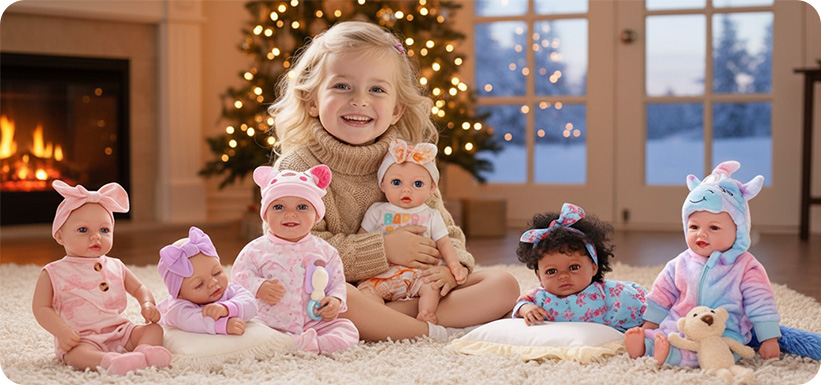
She hadn’t spoken a clear sentence in three weeks.
Then the nurse placed a silicone reborn doll in her arms. The woman — 81 years old, late-stage Alzheimer’s — went quiet. Looked down. Adjusted her grip the way you do with a real newborn: one hand firm beneath the head, one supporting the back. And then, softly: “There you are. I’ve been looking everywhere.”
She named it. She carried it to meals. She slept with it tucked beside her. And for the first time in months, her evenings were calm.
If you’re a caregiver, a family member, a therapist, or someone navigating grief yourself — that story matters. Because it isn’t a one-off. It’s playing out in care homes across the USA, UK, Germany, France, Canada, and Australia right now. And peer-reviewed clinical research is finally catching up to what nurses on the ground have known for years: silicone reborn dolls work. Not as a miracle. Not as a cure. But as a documented, non-pharmacological tool that meaningfully improves quality of life for some of the most vulnerable people among us.
Here’s exactly what the evidence says — and what you need to know to use it well.
Show Image Caption: Doll therapy using weighted silicone reborn dolls is a documented non-pharmacological intervention now used in care homes across the USA, UK, Germany, and Australia. Image: [Your store/brand name]
Why the Brain Responds — The Science in Plain English
Here’s why this works, and it has nothing to do with confusion or delusion.
Human beings are wired with what researchers call the caregiving instinct — a deep, evolutionarily ancient drive to nurture vulnerable infants. This instinct doesn’t live in the conscious, rational brain. It lives in the limbic system — the older, deeper regions that process emotion, attachment, and instinct rather than logic or memory.
Dementia destroys the higher cognitive functions first. Memory, recognition, reasoning — these go early. But the limbic system is remarkably resilient. A person with moderate-to-advanced Alzheimer’s may not recognise their own children. But place a weighted, skin-like silicone reborn doll in their arms and something stirs. The hands know what to do even when the mind cannot explain why.
This is exactly why a full body silicone reborn doll outperforms stuffed animals, plastic dolls, or vinyl alternatives in therapeutic settings. The skin-like platinum silicone warms from body heat. It yields under gentle pressure exactly like real tissue. The weight distributes naturally — head heavy, limbs settling. These are not cosmetic features. They are the biological triggers that activate the caregiving response. And they work at a level of the brain that dementia cannot fully reach.
What the Clinical Research Actually Says
Let’s be clear: doll therapy is not anecdote dressed up as science. It has been studied, peer-reviewed, and published in reputable medical journals. Here’s what the evidence shows.
The Cleveland Clinic Pilot Study
A team of Cleveland Clinic nurse investigators conducted a pilot study evaluating baby doll therapy with patients with dementia or Alzheimer’s disease, finding that healthcare facilities using baby dolls reported success in reducing confusion and agitation. The patients who received dolls often named them and used tables as cribs or held them while sleeping. Nurses and family members reported improvements in mood and reductions in agitation, with the study confirming that baby doll therapy may be a feasible nonpharmacologic intervention.
That word — nonpharmacologic — matters enormously right now. Families and clinicians are increasingly concerned about the overuse of sedating medications in dementia care. A tool that reduces agitation without chemical sedation is not a small thing.
The Systematic Review Evidence
Multiple studies have found benefits in the use of doll therapy, observing a decrease of negative behaviors such as agitation, aggressiveness, or erratic wandering, as well as an increase in communication with the environment and independence in daily life. These are among the hardest dementia symptoms to manage — for patients, families, and care staff alike.
In terms of the type of doll used, dolls with a baby-like appearance — including reborn and empathy dolls — generated a higher commitment from patients compared to stuffed and other kinds of dolls. This finding is clinically significant. It means the realism of the doll is not incidental — it is doing active therapeutic work. The more convincingly the doll communicates “infant” to the nervous system, the stronger and more sustained the nurturing response.
The Queen’s University Belfast Scoping Review (2024)
A scoping review published in 2024 by researchers at Queen’s University Belfast’s School of Nursing and Midwifery found that doll therapy is associated with positive changes in a person’s wellbeing and behavior in care home settings, with benefits extending beyond behavioral outcomes to broader psychosocial wellbeing.
Broader psychosocial wellbeing. Not just calmer evenings — better overall quality of life. That scope matters when you’re deciding whether this is worth introducing.
Randomised Controlled Trial Evidence
A randomised single-blind controlled trial found that participants in the doll therapy intervention group showed a significant decrease in neuropsychiatric inventory scores compared to the control group. Randomised controlled trials are the gold standard of clinical evidence. This is not observational data or anecdote — this is controlled research showing measurable outcomes.
Beyond Dementia — Three Other Uses That Are Working
Dementia care gets most of the research attention. But silicone reborn dolls are being used therapeutically in several other contexts with genuine, documented benefit.
Show Image Caption: For parents navigating infant loss or miscarriage, a silicone reborn doll can provide a compassionate, embodied way to process grief that talk therapy alone often cannot reach. Image: [Your store/brand name]
Grief and Infant Loss
For parents who have experienced stillbirth, miscarriage, or neonatal death, a realistic silicone reborn doll provides a tangible channel for the nurturing instincts that have nowhere to go. Grief therapists report that holding, dressing, and caring for a lifelike doll allows clients to engage with grief in an active, embodied way that talk therapy alone often cannot reach. Some families commission custom dolls modeled on photographs of their child. For those it helps, the impact runs deep.
This is not for everyone. That’s fine. But it is for more people than you might expect — and for them, it works.
Anxiety, Loneliness, and Emotional Regulation
Whether used in grief therapy, dementia care, or community meetups, realistic baby dolls reflect the many ways people seek comfort and connection — serving as coping tools for those navigating grief, anxiety, or life transitions, and providing a bridge between inner experience and outward healing.
For older adults experiencing chronic loneliness — a documented public health crisis affecting millions across the USA, UK, Germany, and Canada — a daily nurturing routine built around a weighted reborn doll creates purpose, sensory comfort, and gentle structure. Research has linked loneliness to increased risk of dementia, cardiovascular disease, and depression. Anything that meaningfully reduces it deserves serious attention.
Autism and Social Development
Some occupational therapists and autism support practitioners have incorporated lifelike silicone baby dolls into social skill development work. The predictability and non-reactivity of a doll — combined with genuinely human features — can offer a lower-anxiety way to practice nurturing, empathy expression, and turn-taking. Formal research in this area is still developing, but practitioner reports are consistently encouraging and the theoretical basis is solid.
What Caregivers Need to Know Before Starting
If you’re thinking about introducing a silicone reborn doll in a care or therapeutic setting, here are the four most important practical points from clinical guidance.
1. Introduce it naturally, not formally. Don’t announce “here is your doll.” Place the doll near the person — on a chair beside them, within their line of sight — and let curiosity and instinct take over. Forced or ceremonial introductions consistently produce worse outcomes than quiet, unhurried discovery.
2. Never call it a toy. In dementia care especially, this risks distress or confusion. If the person believes the doll is a real infant, follow their lead with gentleness and respect. Correcting this belief provides zero cognitive benefit and causes measurable harm.
3. Weight matters — don’t compromise on it. A weighted silicone reborn doll in the 4–7 lb range activates the nurturing response far more effectively than a lightweight alternative. The weight is doing neurological work. Choose accordingly.
4. Not everyone responds — and that’s fine. Doll therapy is a useful tool for many, not a universal intervention. If someone shows discomfort or no interest, remove the doll without comment and try a different approach. Never persist with someone who isn’t responding positively.
Choosing the Right Doll for Therapeutic Use

Not all silicone reborn dolls are equally suited to therapeutic settings. Here’s what to prioritise.
Full body silicone over everything else. The complete skin-like texture throughout the whole doll — including the torso — produces the fullest sensory experience. For dementia therapy, this is worth the additional cost. A partial silicone doll with a cloth body has its place for collectors, but in a clinical or therapeutic context, full silicone is the better tool.
Even weight distribution throughout the body. The weight needs to shift naturally when the doll is repositioned — not sit concentrated in a central cloth pouch. This natural weight shift is part of what the brain is reading.
A calm, soft facial expression. A wide-open, alert expression can feel demanding. For anxiety and dementia contexts, a softly closed or drowsy expression tends to produce calmer, more sustained engagement.
Durable enough for regular handling. In a care setting with multiple handlers and daily use, a quality mid-range full body silicone reborn doll in the $400–$800 range is often more practical than a fragile collector-grade piece. It needs to be cleaned regularly and handled with care but not anxiety. Our Ultimate Guide to Silicone Reborn Dolls covers the full pricing and quality landscape across every tier.
For a detailed breakdown of why silicone outperforms vinyl specifically in therapeutic contexts, our silicone vs vinyl reborn dolls guide covers the sensory and clinical differences thoroughly.
FAQs: Silicone Reborn Dolls for Therapy & Dementia Care
Q1: Is doll therapy for dementia medically recognised?
Yes. Doll therapy is recognised as a non-pharmacological psychosocial intervention in dementia care by clinical bodies in the UK, USA, and internationally. Peer-reviewed studies published in BMC Geriatrics, the Journal of Clinical Medicine, and research from the Cleveland Clinic all document its effectiveness in reducing agitation and improving wellbeing in dementia patients.
Q2: Is it ethical to let a dementia patient think the doll is real?
This is the question families ask most often — and it’s completely fair. The clinical consensus is clear: gently following the person’s lead, rather than correcting them, is the compassionate and appropriate approach. Correction provides no cognitive benefit and causes measurable distress. Engagement with the doll provides documented calming and wellbeing benefits. Dignity, comfort, and quality of life are the governing principles.
Q3: Silicone or vinyl — which works better for therapy?
Clinical feedback and research consistently favour full body silicone reborn dolls for therapeutic use. Studies note that dolls with a baby-like appearance and realistic tactile qualities generated higher patient commitment and engagement than less realistic alternatives. The skin-like texture, warmth response, and even weight distribution of silicone produce stronger and more sustained nurturing responses than vinyl or stuffed alternatives.
Q4: Can a silicone reborn doll help with grief after pregnancy loss?
Yes — and this use is actively supported by grief therapists and bereavement counsellors. A silicone reborn doll, sometimes custom-made to resemble a lost infant, gives bereaved parents a tangible way to engage with nurturing instincts that have nowhere else to go. It is most effective when introduced as part of a broader therapeutic process with a licensed grief professional.
Q5: What weight should a therapeutic reborn doll be?
Aim for 4–7 lbs with even weight distribution throughout the body. This closely matches the weight of a real newborn and is light enough to hold comfortably for extended periods. Avoid very light dolls — the weight is the mechanism, not a feature.
Q6: How do I handle family members who are uncomfortable with doll therapy?
This is common and completely understandable. Watching a parent interact with a doll as if it were a real infant can be emotionally complex for adult children. A brief, honest conversation explaining the therapeutic basis — the neuroscience of caregiving instinct, the documented clinical outcomes, the quality-of-life improvements — usually helps families move from discomfort to support. Frame it as a tool for their loved one’s wellbeing, not a workaround or a deception.
One Last Thing
The woman who named her doll and carried it to dinner — she’s not confused. Her conscious mind may have lost the thread. But somewhere deeper, something still knows how to love and how to care. The silicone reborn doll in her arms didn’t give her that. It just gave that part of her somewhere to go.
That’s what good therapy does. It meets people where they are. Not where we wish they were.
If you’re just starting to explore silicone reborn dolls and want to understand the full landscape — types, pricing, care, and what to look for when buying — our Ultimate Guide to Silicone Reborn Dolls covers everything in one place