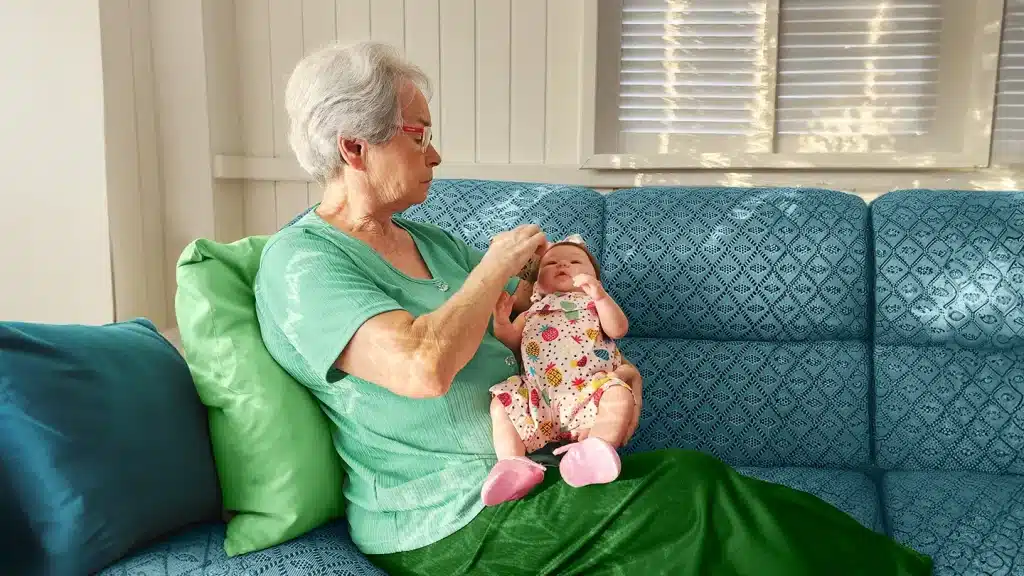
How to Introduce Doll Therapy in a Care Home (2026): A Step-by-Step Guide for Staff, Managers and Families
Lynn Howerton watched her father — a US Air Force veteran with dementia — receive a doll dressed in patriotic colours. His reaction was immediate. No coaxing. No confusion. Just a quiet, settled recognition of something that felt like purpose. “Just having that emblem gives them that proud moment when they served our country,” she said.
That story carries the most important lesson about introducing doll therapy in a care home: it works best when it’s personal, unhurried, and led entirely by the resident — not the staff.
A randomised controlled trial enrolling 52 nursing home residents with dementia found that doll therapy significantly reduced behavioural and psychological symptoms compared to standard treatment, measured across 45 and 90 days using clinical scales including the Neuropsychiatric Inventory. The evidence is there. The outcomes are real. What most care homes lack is not the will to try it — it’s a clear, practical protocol for doing it right.
This guide gives you that protocol. Step by step. For facility managers, nursing staff, occupational therapists, and family members who want to introduce silicone reborn doll therapy in a care home setting with confidence, consistency, and genuine clinical intent.
Before You Begin: The 3 Things Every Care Home Needs in Place
Do not introduce doll therapy without these three foundations. Skipping them produces inconsistent results at best — and distress at worst.
1. Staff training and consistent approach. Every staff member who interacts with a resident participating in doll therapy must be briefed and aligned. A scoping review covering 12 primary research studies found three main themes from doll therapy programmes: reduction in behavioural and psychological symptoms, increased communication skills, and reduction in caregiver distress. None of those outcomes are achievable if one nurse engages warmly while another expresses scepticism in front of the resident. Consistency is everything. Train the whole team — not just the champions.
2. Individual assessment before selection. Not every resident is a candidate. Experts say baby doll therapy is not for all dementia patients. Before introducing a doll to any resident, assess their personal history — were they a parent? A grandparent? Did they work with children? People for whom nurturing was a central identity tend to respond most strongly. People with no such history, or who have expressed discomfort with dolls, should not be pressured into participation.
3. Family communication in advance. Introduce the programme to families before it begins — not after they walk in and find their parent holding a doll. Explain the evidence. Explain the protocol. Explain what you will and won’t do. Families who understand the therapeutic basis become allies. Families who are surprised become critics. Brief them first, every time.
The 6-Phase Clinical Protocol
A systematic review drawing on seven eligible studies developed a six-phase intervention protocol: evaluation of the individual’s background, introduction of the doll, assessment of reaction, presentation of the doll, encouragement of doll care, and removal of the doll. This is the most clinically rigorous framework available. Here is how to apply it in a real care home setting.
Phase 1 — Individual Background Evaluation
Before selecting a doll or planning an introduction, gather information on the resident’s personal history.
Did they have children or grandchildren? How many?
What is their cultural background — does it influence comfort with infant caregiving imagery?
What is their current stage of dementia and primary behavioural symptoms?
Have they shown interest in infant-related objects, imagery, or conversations previously?
Is there any history of traumatic infant loss that could make this interaction distressing?
This information shapes everything that follows — the doll you choose, the way you introduce it, and how you interpret their response.
Phase 2 — Choosing the Right Doll
Doll selection is not secondary. A systematic review and meta-analysis found that administering empathy dolls and coordinating with caregivers may be the most appropriate and effective option for doll therapy in nursing home settings. The doll must convincingly resemble a real infant — not a cartoon or a fashion doll.
For care home use, the ideal silicone reborn doll has:
Full body platinum-cure silicone — consistent skin-like texture everywhere
Weight of 4 to 7 lbs distributed evenly throughout the body — not concentrated in a pouch
A calm, sleeping or softly drowsy expression — not wide-eyed and alert
A size of 16 to 20 inches — proportional to a real newborn
Durable construction suitable for daily handling and regular cleaning
Evidence shows that the use of lifelike dolls can be particularly helpful for those who may not be engaging with others or who are restless, distressed or anxious, improving their wellbeing and ability to communicate.
Browse verified therapeutic-grade silicone reborn dolls at siliconereborns.com — every piece selected for clinical suitability, confirmed platinum-cure, and appropriate weight. For specific picks with clinical assessments at every budget tier, our Best Silicone Reborn Dolls for Dementia Care guide has everything you need.
Phase 3 — The Introduction
This is where most care homes go wrong. They present the doll formally. They announce it. They watch expectantly. And they turn a moment that should feel instinctive into something that feels like a test.
Introduce the doll gently: avoid forcing the doll onto your loved one. Instead, place it nearby and observe their reaction.
In practice this means: place the doll on a chair near the resident. On a table in their eyeline. In a bassinet nearby. Do not hand it to them. Do not say “here is a doll for you.” Do not draw attention to it at all. Walk away. Give the instinct room to work without an audience.
If the person shows no interest, don’t try to press it on them. Some people with dementia simply aren’t interested in dolls and soft toys, but you can always try again another day.
If they reach for it — wonderful. Step back. Let them hold it at their own pace.
Phase 4 — Assessing the Reaction
Once the resident engages, observe carefully before deciding to continue the programme. Watch for:
Positive indicators: Calm body language, gentle handling, verbal engagement with the doll (speaking to it, naming it), reduced agitation compared to baseline, improved willingness to participate in other activities.
Indicators to pause: Distress when the doll is in an unusual position, overattachment that disrupts eating or sleeping, confusion that increases rather than decreases, negative verbal reaction.
One qualitative study reported instances where a participant displayed negative reactions to doll therapy, particularly when the doll was placed in precarious positions, causing distress or confusion as the participant rushed to cradle the doll as if it were a real baby. If this occurs — remove the doll calmly, without drama, and document the response before deciding whether to try again.
Phase 5 — Encouraging Doll Care
For residents who respond positively, the next step is embedding doll care into their daily routine. This is where the therapeutic benefit compounds.
Gentle prompts that work:
“She looks like she needs a rest — would you like to settle her?”
“Doesn’t she have a lovely face?” — as suggested by Dementia UK for residents with communication difficulties
“Shall we get her ready for the afternoon?”
Never refer to the doll as a toy. Never correct a resident who believes it is real. Program Outreach Director Verna Law said: “We also don’t just give them the doll — we have to make sure that they are willing to accept the doll.” Willing acceptance and ongoing positive engagement are the measures of success — not staff convenience.
One practical note from clinical settings: the person with dementia may become very attached to their doll and be upset if someone else picks it up. You should avoid having the doll out in situations where this may happen, for example, in a communal area of a care home. Manage this proactively — not reactively.
Phase 6 — Managing Absence and Removal
What happens when the doll needs to be cleaned, repaired, or temporarily removed?
Plan for this before it happens. A sudden absence of the doll — without preparation — can cause acute distress in residents who have become attached. Strategies that work:
Rotate between two similar dolls so cleaning never means absence
Frame removal as “she’s having a rest” or “she’s being looked after” — language that maintains the narrative the resident has built
Never remove a doll abruptly or without a calm, gentle explanation in language that respects the resident’s understanding of the doll’s reality
Documenting Outcomes — What to Track
A baby doll therapy implementation protocol developed and applied with 16 residents in a dementia care centre found increases in levels of happiness, activity and liveliness, interaction with staff and others, and ease of giving care, as well as a reduction in the level of anxiety.
Track the same outcomes in your setting:
Agitation frequency and severity — before and after introduction, measured weekly
Medication use — any reduction in PRN psychotropic use
Sleep quality
Meal engagement
Social interaction with staff and other residents
Verbal communication frequency
Documentation serves two purposes: it helps you identify who is responding positively and who is not, and it builds the evidence base for continuing or expanding the programme. Care home managers who can show outcome data are better positioned to advocate for the programme with families, commissioners, and clinical oversight bodies.
A Note on Dignity — The Only Non-Negotiable
Every clinical protocol, every staff briefing, every family conversation about doll therapy in a care home must be grounded in one principle: the dignity of the resident is never compromised.
This means staff who engage with the doll interaction with the same quiet respect they’d extend to any meaningful therapeutic activity. It means no photographing of residents with dolls without explicit consent. It means no sharing of videos or images on social media — however well-intentioned. It means that when a resident’s family visits and finds their parent speaking softly to a silicone reborn doll, the staff member present explains with warmth and clinical confidence what is happening and why.
Dignity is not in tension with doll therapy. Doll therapy, done well, is an expression of dignity — it meets the person exactly where they are, activates their deepest identity as a caregiver and nurturer, and asks nothing of them that they cannot give. That is respect. That is care. That is the whole point.
FAQs: Introducing Doll Therapy in a Care Home
What training do care home staff need before starting doll therapy?
Staff need briefing on the evidence base, the individual assessment process, consistent language and behaviour around the doll, how to respond if a resident believes the doll is real, how to manage family concerns, and how to document outcomes. A 30 to 60 minute team session covering these points — ideally led by a nurse or occupational therapist with the clinical research in hand — is the minimum required before any introduction begins.
How do I choose which residents to offer doll therapy to?
Prioritise residents with moderate to severe dementia who display behavioural and psychological symptoms — agitation, restlessness, withdrawal, verbal outbursts — who have a history of parenthood or significant caregiving roles, and who have not previously expressed discomfort with infant-related objects. Avoid residents with a history of traumatic infant loss unless working alongside a specialist therapist.
What do I do if a resident’s family objects to doll therapy?
Listen to their concern fully before responding. Acknowledge that the reaction is understandable. Then share the clinical evidence — specifically the randomised controlled trial data and the Dementia UK guidance — in plain language. Explain the protocol: no forcing, no correction of beliefs, full dignity maintained. Offer them the opportunity to observe an interaction session. Most objections resolve when families understand the evidence and see the approach in practice.
How long does it take to see results from doll therapy?
Results vary significantly by individual. Some residents show immediate positive response in the first session. Others take days or weeks to engage. The full duration of doll therapy interventions in published studies ranged from 1 to 24 weeks, with prolonged duration allowing for greater benefits. Do not assess the programme’s success in the first week. Track outcomes over a minimum of four to six weeks.
Can doll therapy reduce medication use in care home residents?
Research conducted in the UK found that people with dementia who used doll therapy were less irritable and that it reduced the need for medication. This outcome is not guaranteed — it depends on individual response and programme quality — but it is a documented possibility that makes doll therapy particularly valuable given the risks associated with psychotropic medication in elderly patients.
What if a resident becomes too attached to their doll?
Monitor for attachment that disrupts eating, sleeping, or other care activities. If this occurs, gently manage the doll’s availability — keeping it out of sight during meals, framing its temporary absence in narrative language the resident can accept. Avoid abrupt removal. Consult with the resident’s care team and consider involving a specialist dementia therapist if overattachment becomes a consistent concern.
Where should I buy silicone reborn dolls for a care home?
Purchase from verified, authenticated sources that can confirm platinum-cure silicone, material safety specifications, and appropriate weight. siliconereborns.com offers a therapeutic range specifically selected for care setting use. Our Best Silicone Reborn Dolls for Dementia Care guide covers the top picks at every budget tier with clinical criteria applied to each.